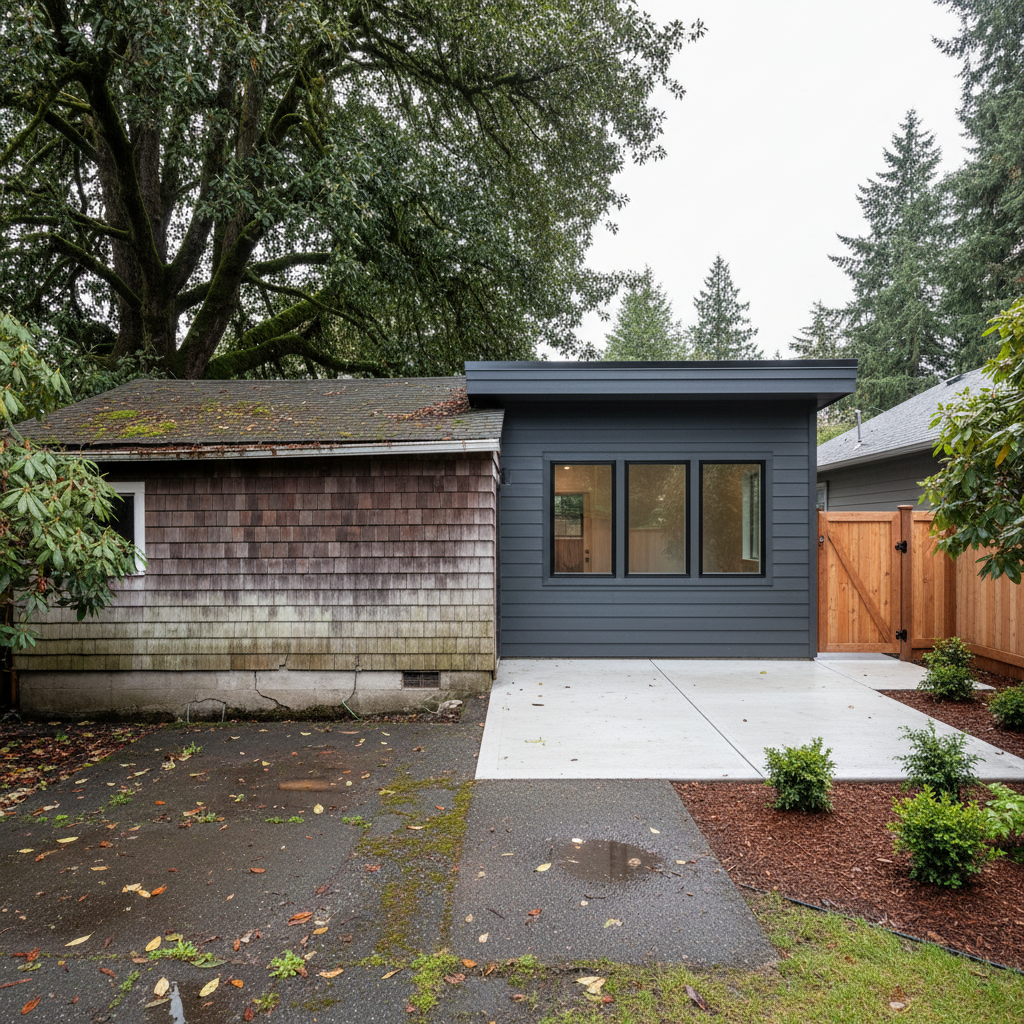
So, you're kicking around the idea of a Junior ADU (JADU) on your property. Smart move. Whether it's for family, rental income, or just some extra space, JADUs are a great way to add value and flexibility. But when it comes to actually building one, you've generally got two main paths: converting an existing part of your house (like a basement or an attached garage) or building a brand-new, detached structure. Let's talk about what I've seen work and what you should really think about before you commit.
The Built-In JADU: Using What You've Got
This is where you take a section of your existing home – maybe a basement, a spare wing, or even an attached garage – and turn it into a self-contained living unit. It's often called an 'internal conversion' or 'attached JADU'.
Cost
Generally, converting existing space is cheaper upfront. You've already got the foundation, the roof, and at least three walls. You're mostly dealing with interior finishes, plumbing, electrical upgrades, and maybe a separate entrance. You're not pouring new concrete or framing an entire new structure from scratch. That said, sometimes you uncover surprises in older Seattle homes – like knob-and-tube wiring or unexpected structural issues – that can drive costs up. But usually, it's the more budget-friendly starting point.
Durability
Durability here is tied directly to the durability of your main house. If your home is well-maintained and structurally sound, your JADU will be too. You're not adding new exterior exposure, so you don't have new concerns about weatherproofing or foundation settlement that are separate from your main house. It's all one cohesive unit, which can be a good thing.
Maintenance
Maintenance is often simpler. You're already maintaining the exterior of your main house, so there aren't separate exterior walls, roofs, or foundations to worry about for the JADU. Inside, it's typical home maintenance – keeping appliances running, fixing leaky faucets, that kind of thing. You might have separate utility meters, which means separate bills, but the physical upkeep is integrated.
Appearance
This is where it can get tricky. A built-in JADU needs to blend seamlessly with your main home. If you're converting a basement, you might be dealing with lower ceilings or less natural light. If it's an attached garage, you'll need to make sure the new windows and entrance don't look tacked on. The goal is to make it look like it was always meant to be there, not an afterthought. Good design is key here to avoid a Frankenstein look.
The Detached JADU: Building from Scratch
This is a separate structure on your property, often in the backyard. Think of it as a tiny house or a small cottage. It's its own building, standing apart from your main residence.
Cost
Expect higher upfront costs. You're essentially building a mini-house. That means a new foundation, all new framing, a new roof, new siding, new plumbing, new electrical service, and extending utilities from the main house. There's more excavation, more materials, and more labor involved. You're also more exposed to the elements during construction, which in Seattle's rainy season can mean delays and added costs for weather protection.
Durability
A brand-new build means you're starting with all new materials and modern construction techniques. You can specify higher-quality insulation, better windows, and more durable siding right from the start. This often translates to a very durable structure that's built to last, often exceeding the durability of older parts of your main home. Plus, you're not inheriting any hidden issues from an older structure.
Maintenance
You'll have a separate exterior to maintain – another roof to clean, more siding to wash, separate gutters, and a separate foundation to inspect. This means more work or more expense if you hire someone. However, because it's new, major issues are less likely in the short to medium term. Inside, it's similar to the built-in option, but with potentially newer systems that might need less immediate attention.
Appearance
This is where detached JADUs can shine. You have complete control over the design, allowing you to create something truly unique that either complements your main home or stands out as a modern, distinct structure. You can optimize for natural light, views, and a sense of privacy. It can significantly enhance your property's curb appeal if done well, especially in neighborhoods like Ballard or West Seattle where backyard spaces are often underutilized.
My Recommendation for Seattle Homeowners
For most homeowners in Seattle, especially if you're looking for the best long-term value, durability, and a solid return on investment, I usually lean towards a detached JADU, if your lot allows for it.
Here's why:
- New Construction Benefits: You get all new systems, built to current codes, often with better insulation and energy efficiency. This means lower utility bills and fewer headaches down the road. You avoid the unknowns of an older structure.
- Flexibility in Design: You're not constrained by existing walls or floor plans. You can design a space that's perfectly optimized for its purpose, whether it's a rental, a home office, or a mother-in-law unit. This also means better natural light and often a more appealing aesthetic.
- Privacy & Separation: A detached unit offers a level of privacy for both the main house occupants and the JADU occupants that an attached unit just can't match. This is a huge selling point for renters and family members alike.
- Resale Value: A well-designed, detached JADU often adds more perceived value to your property. It's seen as a more independent and desirable asset.
Now, I'm not saying built-in JADUs are bad. If your budget is tight, or you have a fantastic basement with good ceiling height and easy access, it can be a very practical solution. But you need to be prepared for potential surprises during demolition and renovation, and you might have to compromise on natural light or layout.
When we're talking about the typical wet Seattle climate, building new allows us to really focus on proper waterproofing, drainage, and durable exterior materials from the ground up. You can ensure the foundation is robust for our often clay-heavy soils, and that the envelope is designed to handle our persistent rain. With Seattle ADU Solutions, we've seen how a well-built detached JADU can truly transform a property, offering a distinct, high-quality living space that stands the test of time.
Ultimately, the best choice depends on your specific property, your budget, and what you want to get out of the JADU. But if you have the space and the means, building new gives you a lot more control and often a better long-term outcome.